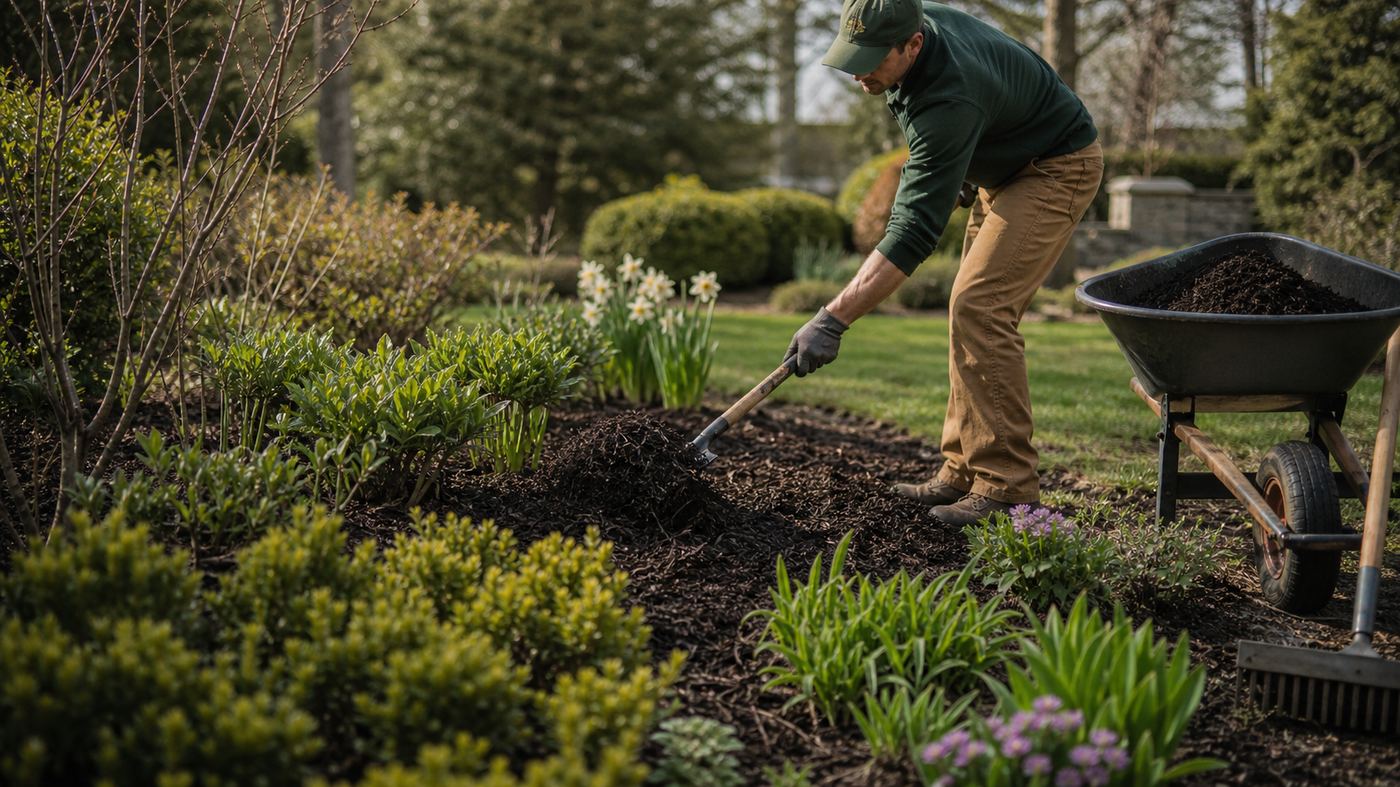
Every October, a familiar sound moves through Fairfield County: the drone of crews shearing perennial gardens to the ground. Beds are cut flat, hauled away, and tucked under blankets of mulch — tidy, finished, and, we'd argue, exactly wrong. We stopped doing wholesale fall cut-backs at Sage & Stone six years ago. Our gardens have never been healthier, and our clients' winter views have never been more interesting.
What standing stems actually do
A perennial garden left standing isn't neglected — it's working. Hollow stems of joe-pye weed and bee balm become overwintering quarters for native bees, whose populations decide how well your garden sets fruit and seed next year. Seed heads of echinacea, rudbeckia and grasses feed goldfinches and juncos straight through February. And the standing structure traps leaves and snow exactly where you want them: insulating crowns and feeding soil.
"A garden cut to the ground in October is a pantry burned down in front of hungry guests."
There's an aesthetic argument too, and it's not a consolation prize. Frost on a standing seed head, low winter sun through a stand of switchgrass — these are some of the finest moments a garden offers. The Dutch designers call it the fourth season. We just call it not throwing away a quarter of the year.
What we do instead
- October: we cut back only what's diseased — peony foliage, anything with powdery mildew — and remove it from the property entirely.
- November: leaves get raked off lawns and into beds, shredded where heavy. Free mulch, free soil food.
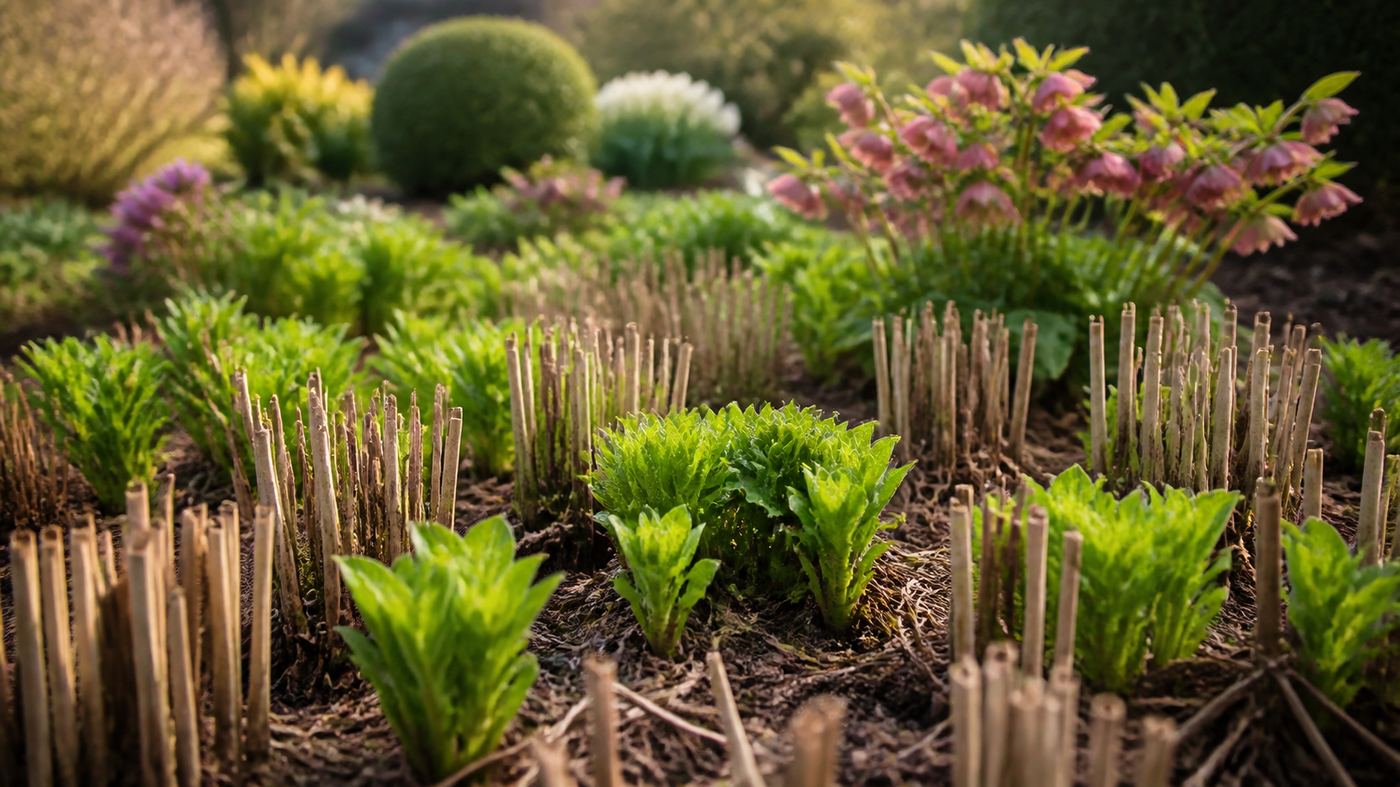
- Late winter: the real cut-back happens in March, once temperatures hold above 50°F for a week and overwintering insects have emerged.
- The stems we cut get stacked briefly at the property edge before composting, letting any stragglers wake up and fly off.
The spring payoff nobody mentions
Here's what surprised even us: beds managed this way wake up earlier and fuller. Crowns insulated by their own stems suffer less frost heave. Soil under a winter's worth of decomposing leaf cover comes up darker and looser. And because March cut-backs happen when the ground is firm, there's none of the bed compaction that October's soggy soil guarantees.
Your garden spent all season building that architecture. Let it stand. Let it feed something. Cut it down in March, and watch what comes back.

Dr. Lena Okonkwo
Head of HorticultureLena leads plant health and planting design at Sage & Stone. PhD in plant ecology, hands permanently in the dirt.